



How To Perform Servo Motor Repairs In-House
For manufacturers, unplanned equipment downtime poses the greatest risk to productivity and profitability. When servo motors fail or operate below peak efficiency, the consequences can be severe, disrupting robotics, CNC machines, and entire production lines.
The results: significant production losses and expensive repairs.
Traditionally, manufacturers had little choice but to send motors out for repair, enduring long wait times that could stretch for weeks. That’s why more manufacturers are facing this challenge head-on with in-house servo motor repair.
Outsourcing repairs can lead to long lead times, shipping costs, and potential supply chain disruptions. By investing in the right diagnostic tools and repair technology, manufacturers can eliminate these delays and regain control over their production schedules. Bringing repairs in-house enables:
- Faster Turnaround: Immediate troubleshooting and repairs prevent extended downtime.
- Cost Savings: Avoiding third-party repair services and shipping fees can significantly reduce expenses.
- Greater Control: Maintenance teams can prioritize and schedule repairs based on operational needs rather than external timelines.
- Enhanced Reliability: Regular in-house maintenance helps prevent failures before they lead to major disruptions.
7 Requirements for an In-House Servo Motor Repair Environment
 Bringing servo motor repair in-house translates into reduced downtime, controlled repair costs, and the extended life of motion-control equipment throughout the factory. But setting up an effective factory-based environment requires more than a workbench and a toolbox.
There are 7 essential elements needed to properly repair and maintain servo motors:
- A clean, dedicated workspace
- Proper diagnostic and repair tools
- Trained technicians
- Standardized maintenance procedures
- Organized spare-parts inventory
- Strong safety practices
- A commitment to continuous improvement
Following this guideline creates an optimal environment where servo motors can be serviced quickly, accurately, and consistently. Here’s a deeper look at seven of the most important requirements for creating an efficient servo motor maintenance and repair center:
1. Space Allocation
First, designate an appropriate area within your factory. Because servo motors are sensitive to dust and debris, it’s recommended that the dedicated area is clean and isolated from general factory operations to prevent contamination.
Along these lines, be sure that the area is well ventilated. Proper airflow is crucial to maintain a dust-free environment and ensure the comfort and safety of the technicians.
Finally, allocate enough space to accommodate all necessary tools and equipment, along with a supply of spare parts. The area should allow technicians to work comfortably without interference.
2. Tools and Equipment
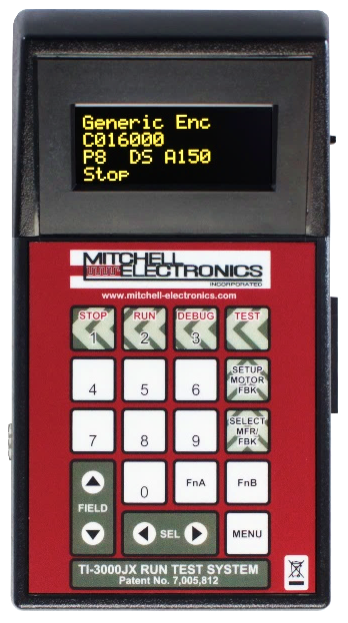 Equipping your maintenance area with the right tools and equipment is crucial. Your list of essential tools and equipment includes:
- Diagnosis and Test Tools: These items help to identify problems, ensure encoder alignment, and verify repairs. Such tools include servo motor and encoder test tools, oscilloscopes, multimeters, and signal generators for testing electrical components.
- Hand Tools: An array of hand tools such as screwdrivers, pliers, wrenches, and torque tools for disassembly and reassembly.
- Cleaning Equipment: Ultrasonic cleaners and brushes should be used for removing dirt and grime from motor components.
- Testing Stations: A dedicated station should be available to test servo motors under various conditions, including winding testing and vibration analysis.
- Lubrication Systems: Proper lubrication is vital for servo motor longevity. Ensure you have the right lubricants and dispensing equipment.
- Storage Solutions: Organized storage for spare parts and components to maintain inventory accuracy and prevent loss or damage.
3. Skilled Personnel
While you don’t have to be a master mechanic to service a servo motor, your personnel should be trained accordingly. There are steps you can take to ensure you have the right team in place and that they are properly trained. Consider employing technicians with experience in electrical and mechanical systems, and when possible, look for a background in servo motor maintenance and repair.
Conduct regular training programs to keep technicians updated on the latest technologies and repair techniques. Collaborate with servo motor manufacturers or repair equipment providers to remain informed of best practices and training on their equipment.
4. Maintenance Procedures
Establishing maintenance procedures ensures consistency and reliability in your repair activities. This will ensure consistency and conformity as new technicians join the repair team.
Key procedures include:
- Preventive Maintenance Schedule: Regular inspections and servicing can prevent major breakdowns. Develop a preventive maintenance schedule based on manufacturer recommendations.
- Standard Operating Procedures: Create SOPs for common maintenance and repair tasks to ensure uniformity and efficiency.
- Documentation: Maintain detailed records of all maintenance and repair activities. Capturing issues, repairs, and parts used helps to track the effectiveness of your repair team and identify recurring problems.
- Quality Control: Implement quality control checks at every stage of the maintenance process to ensure repairs meet the required standards.
5. Inventory Management
Some parts are critical. For example, spare servo motors, encoders, and bearings are three basics that should have spares on hand. Identify such components and maintain reserve stock to avoid delays during emergencies.
Effective inventory management is therefore crucial to ensure the availability of spare parts and reduce downtime. If applicable, consider employing a computerized inventory management system to track spare parts and components.
6. Safety
Safety is important in any maintenance and repair environment and should never be minimized. Safety measures should include:
- Personal Protective Equipment (PPE): Ensure technicians have access to and wear gloves, safety glasses, and anti-static wristbands.
- Safety Training: Regular safety training sessions to educate technicians on best practices and emergency procedures.
- Emergency Protocols: Clear and accessible emergency protocols, including first aid kits and emergency contact numbers.
7. Continuous Improvement
Like all areas of the company, you should strive to continually enhance and refine your servo motor repair capabilities. Servo motors are constantly evolving, and your repair environment must keep pace. Implement a procedure to keep up to date with the latest advancements in servo motor technology, and incorporate new tools and techniques into your maintenance processes.
Conduct regular audits to assess the effectiveness of your maintenance procedures and identify areas for improvement. Stay informed of new equipment, techniques, and best practices, and establish a line of communication for technicians to share insights and suggestions.
 Servo Motor FAQs Answered
The Risks of Servo Repair Without the Right Tools
Like any piece of equipment, servo motors are prone to wear and will experience issues over time. When problems arise, accurate diagnostics and swift repairs are essential. However, attempting these tasks without the proper tools creates significant challenges before, during, and after the repair process.
General-purpose tools often fall short, as they cannot accurately replicate real-world conditions or effectively test critical components such as resolvers and encoders, which are feedback devices used on servo motors. These limitations result in misdiagnosis, leaving issues unresolved, consuming valuable time, and driving up repair costs.
Here are some common issues that can arise when attempting servo motor repairs without using the proper tools.
Inaccurate Diagnostics
Many repair technicians are quick to employ generic diagnostic devices such as oscilloscopes or multimeters to identify servo motor issues. While these instruments have their place in general electronics testing, they are not designed to diagnose the intricacies of servo motor systems.
Such devices fail to identify specific servo motor issues such as encoder feedback functionality, feedback alignment, commutation, and motor winding problems. Using insufficient diagnosis methods increases the likelihood of unresolved issues, further damage to the servo motor, and prolonged equipment downtime.
Encoder Alignment Issues
Encoders play a critical role in servo motor systems, but they are also delicate components. Testing encoders without the proper tools makes it challenging to verify alignment or identify subtle issues like signal degradation or noise interference. When these faults go undetected, they can lead to inconsistent performance, reduced accuracy, or even system failure.
The encoder alignment angle represents the precise relationship between the encoder and the motor windings, a crucial factor for system performance. Proper alignment ensures the motor will deliver the required torque and velocity as instructed by the controller. Even minor misalignments can cause significant issues, including poor motor performance or complete failure to operate. Symptoms of incorrect alignment can include overheating and overcurrent, which can lead the technician on a false search for problems with the motor windings or magnets, which often exhibit similar symptoms.
Read: Servo Encoder Testing, Maintenance, and Alignment
Extended Downtime
Lacking precision diagnostic tools, companies often find themselves in a cycle of discovery, repair, and rework. In such cases, it’s common for technicians to incorrectly identify the source of a problem. This leads to unnecessary part replacements or incomplete fixes. This trial-and-error approach inflates repair costs, but more importantly, it extends downtime.
Additionally, a faulty motor may be sent out for repair without first performing a diagnostic. This often stems from a lack of suitable diagnostic tools. Sometimes fixes can be made quickly in-house. In such instances, outsourcing repairs without understanding the nature of the problem can lead to unnecessary expenses and delays.
Trouble Validating Repairs
In some cases, motors are returned to service without fully addressing the root cause of the problem. When servo motor repairs are not properly validated, minor issues can escalate into major expenses, leading to decreased performance, reduced efficiency, and premature failure.
Poor validation methods caused by unresolved motor issues compromise operational efficiency. This can quickly spiral into excessive downtime, disrupted operations, delayed orders, and forfeited contracts.
Which Testing Tools Do You Need On Site?
 Repairing servo motors without specialized tools introduces numerous risks, including inaccurate diagnostics, inefficient repairs, and prolonged downtime. These challenges create a drain on production and ultimately profitability.
Conversely, investing in reliable testing and validation tools ensures that servo motors perform at their best and operations run smoothly, protecting both your equipment and bottom line.
Mitchell Electronics Inc. offers advanced servo motor diagnosis and repair solutions that deliver precision, reliability, and user-friendly operation. With our tools, companies achieve successful repairs, minimize costs, and enhance operational efficiency.
TI-3000JX: This tester supports serial protocols such as BiSS, MFE, and Tamagawa. It also reads commutation angle data from encoder memory, which improves alignment accuracy. The TI-3000 is ideal for those needing broad compatibility in one portable unit.
TI-5000JX: Built for deeper protocol coverage, the TI-5000 supports Yaskawa, Fanuc, Tamagawa, and others. It enables full encoder memory read and programming capabilities, allowing for more precise diagnostics and repair without relying on multiple devices.
For additional information on servo motor preventive maintenance, download this in-depth guide: The Manufacturer’s Preventative Maintenance Checklist: Limiting Unplanned Downtime.
Here you’ll find insights into:
- The measurable benefits of preventive maintenance
- The most common causes of machine downtime
- Servo motor maintenance steps
- Maintenance tools and best practices
- Maintenance steps to follow regularly
